The Mattress as Mediator: Why the Right Surface Matters
If sleep is a form of nightly negotiation—the brain asking the body for repairs, the body provisioning the brain with rest—the mattress is the table on which the bargain is struck. It is not merely a passive stage but an active mediator: it translates the body’s rhythms into a surface that invites release, supports the spine, dissipates heat, and cushions pressure points that, if neglected, become stubborn aches by dawn. In a world where boxed mattresses promise quick shipping and easy setup, the intimate work of choosing a surface that aligns with your sleep biology remains both stubbornly personal and stubbornly practical.
The domain analysis of bed-in-a-box brands—famously linked to the idea of a one-click purchase and direct-to-consumer convenience—has often treated comfort as a single variable: hardness or softness. Yet a night’s sleep is a choreography of several moving parts: how you distribute weight across your joints, how quickly you release tension in your shoulders and hips, how the surface handles motion so one sleeper doesn’t awaken the other, and how temperature and moisture are managed through the night. In that sense, choosing a mattress becomes a health choice, a decision about daily energy, mood, and even immune function.
To tell this story with nuance, one must consider the texture of memory—what a mattress does to pressure, posture, and temperature; and the texture of science—what experts know about sleep stages, circadian rhythms, and body mechanics. This piece threads those textures into a practical guide: how to pick among the shapes of firmness, the languages of materials (foam, latex, coil), and the quiet science of breathability that governs how warm or cool you feel as you close your eyes.
Firmness as a Language, Not a Doorway
Firmness is not simply a dial turned to “hard” or “soft.” It is a language that your body understands across a night’s journey. Different sleep positions–stomach, back, side–speak different dialects of support. A stomach sleeper, for example, may benefit from a more balanced surface that prevents the midsection from deep compression, while a side sleeper often seeks a surface that eases pressure at the hips and shoulders. The key, then, is specificity: a mattress that accommodates your dominant sleep position but remains flexible enough to support secondary positions as you shift through REM cycles.
Materials that breathe—organic cotton, wool, latex, or well-ventilated coils—help regulate temperature and move moisture away from the sleeper. In turn, a surface that wicks heat reduces nighttime awakenings caused by overheating. The science here is practical as well: many insomniac patterns reveal a simple truth—temperature matters. A cooler core that remains comfortable through the night tends to yield longer stretches of restful sleep and fewer micro-awakenings.
Breathability and Temperature Regulation: The Quiet Heroes
Temperature regulation is often overlooked in consumer discussions about mattresses, yet it is one of the most reliable predictors of sleep quality. The modern sleep surface often hides its heat like a magician’s hat—there is warmth inside, but the magic trick is to keep it moving away from the sleeper. Materials like organic wool, latex, and breathable encasings can act as thermal buffers. They do not merely create comfort; they sustain it for hours, allowing the body to stay in a state of metabolic equanimity as it slips through sleep stages.
Consider the role of movement: when you roll over, your body’s contact with the mattress changes. A surface that minimizes the sensation of movement transfer—allowing a partner to sleep without a subtle, waking nudge—becomes less about “motion isolation” in a vacuum and more about preserving the integrity of a sleep cycle. A well-chosen surface keeps a restful rhythm, enabling you to glide through the night with fewer disruptions.
Sleep Health: A Pedigree of Ideas Across Time
Sleep science is a genealogical enterprise. It threads ideas from ancient thinkers to modern clinicians, moving through hospitals, laboratories, and bedrooms alike. Three figures from different epochs illuminate the conversation, each offering a lens on the work of sleeping well.
-
Hypnos (Ancient Greece, mythic figure) — In the oldest stories of sleep, Hypnos is the god of sleep, a patient weaver of night. He did not fix a mattress or prescribe a pillow; he presided over the moment when the mind releases its to-do lists and the body surrenders to rest. In a modern context, Hypnos reminds us that sleep is not a product but a phenomenon to be invited and honored—nightly, with rituals and environments that acknowledge sleep as a patient, generous partner.
-
Florence Nightingale (1820s–1910s) — The nurse who reimagined hospital sanitation and patient care would recognize the sleep environment as part of healing. Light discipline, air quality, temperature control, and quietude are not mere conveniences; they are health infrastructure. Nightingale’s insistence on cleanliness and environments that support recovery frames our contemporary emphasis on breathable fabrics, clean foundations, and the way a bedroom is ventilated to welcome sleep rather than repel it.
-
Nat Kleitman and William Dement (20th century) — The skull of modern sleep science is built on the shoulders of Nat Kleitman, a pioneer who conducted long overnight observations before the era of consumer mattresses, and William Dement, whose later work anchored sleep stages, circadian rhythms, and the behavioral science of sleep into public understanding. Their legacy is a reminder that sleep is a biological process as well as a lifestyle choice, and that the right mattress is a practical tool to align biology with habit.
-
Matthew Walker (21st century) — A contemporary voice in sleep research, Walker helps translate laboratory findings into daily life. His emphasis on steady circadian cues, the quality of slow-wave sleep, and the relationship between sleep and health sustains the argument for choosing mattresses that support consistent, healthy sleep patterns in a technology-saturated era.
These voices—mythic, hygienic, scientific, and contemporary—converge on a single point: sleep is a discipline that begins with a room and a surface, and then travels through a body with a daily life. A well-chosen mattress is not a miracle cure; it is a responsible ally that helps your body do the quiet work it does every night.
Practical Guide: How to Read the Night’s Surface
Below is a practical framework for surveying the market and testing a mattress at home—especially in the boxed-mattress era where ease of purchase might outpace nuance of comfort.
- Know your sleep position and weight. If you sleep on your side and weigh 150 pounds, you may seek a surface that cushions the shoulders and hips without creating undue spinal extension or compression. If you’re back or stomach, you might lean toward a different distribution of support and a surface that maintains posture without inviting tension in the lower back.
- Test breathing and temperature in the room. A mattress cannot fix every climate; yet it can enhance or hinder how you regulate heat. If you tend to sleep warm, look for breathable covers and latex coils or pocketed springs paired with natural fibers that wick moisture and maintain a cooler core.
- Disentangle the marketing from the science. Boxed mattresses emphasize convenience, but the core questions remain: does the surface align with your posture? Will it support long nights of sleep without causing you to roll or wake with stiffness? Do materials contribute to thermal comfort that lasts through the full sleep cycle?
- At-home testing, with a slow, purposeful approach. If possible, observe how you feel after a 2–3 week trial with a given surface. Notice headaches, shoulder stiffness, or back discomfort that could indicate misalignment. Track your temperature patterns and mood in the morning; those subtle signals accumulate into a decision that feels right, not merely convenient.
Product Spotlight: Coyuchi Organic Cotton Mattress Pad
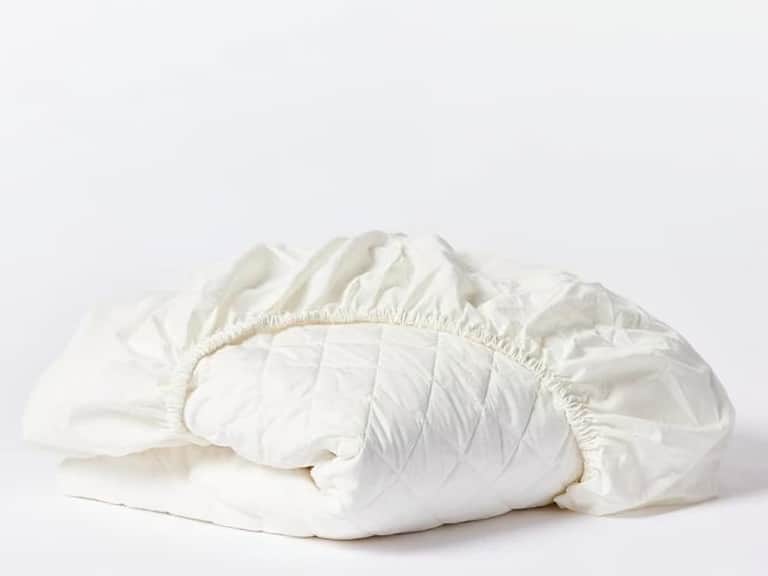
For readers who want a tangible example of the materials conversation in practice, consider the Coyuchi Organic Cotton Mattress Pad. This is a fitted pad whose purpose is practical and ceremonial at once: a simple, effective layer of organic comfort that respects the body and the planet.
- Product: Coyuchi Organic Cotton Mattress Pad
- SKU: COCFMP; Orig ID 889
- Material: GOTS-certified organic cotton inside and out, 220 thread count percale cover
- Design: Quilted in two-inch squares with a deep 15" pocket to accommodate thick mattresses
- Durability and care: Elasticized bottom for snug fit; machine washable; flame retardants-free
- Notes: This pad is a practical, tactile demonstration of breathable, organic foundations in a layered sleep system
Coyuchi’s mattress pad embodies the fundamental principle that a sleep surface is not a single element but part of a layered ecosystem. It sits atop the bed like a calm, honest seamstress, smoothing the path between you and a night of restorative sleep. In the larger arc of mattress education, such pads are the quiet workhorses that keep a mattress healthy by protecting its surface from sweat, oils, and everyday wear. They also demonstrate a core value of the education platform this article champions: a marriage of comfort, health, and sustainability.
A Second, More Robust Example
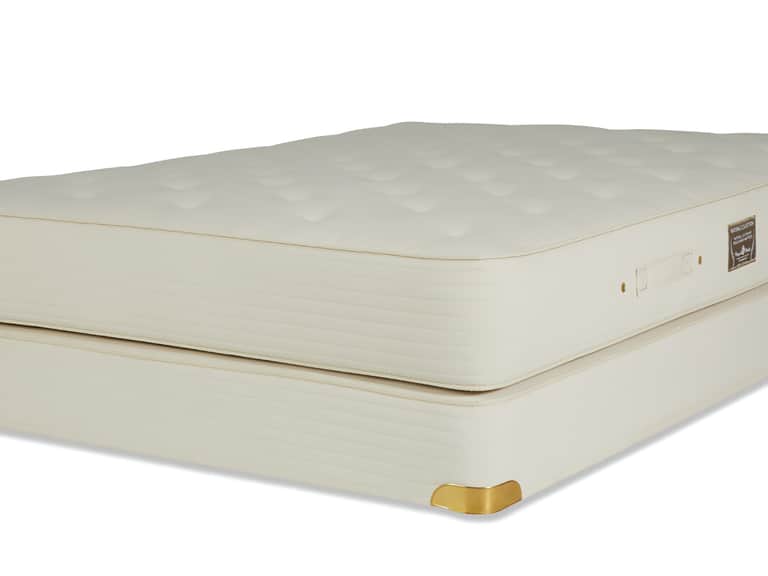
For readers who want a second reference point in the same vein, consider the Royal-Pedic Natural Cotton Mattress with Wool Wrap. This model, listed with a wool wrap of three inches, embodies a more traditional innerspring architecture married to chemical-free natural materials. It offers orthopedic firmness and a classic coil-based support that can appeal to sleepers who prize robust edge support and a rigid, time-honored posture. While not a lightweight boxed option, it serves as a counterpoint to the more minimalist boxed-mattress approach and demonstrates the diversity the sleep marketplace can offer.
Link to product for reference: Royal-Pedic Natural Cotton Mattress with Wool Wrap. Note that this product emphasizes a different structural logic—an example of the breadth within a field that often gets reduced to “foam vs. latex.”
Test After Test: How to Compare Boxed Mattresses with Traditional Models
The following practical checklist helps translate the science of sleep into a consumer’s at-home evaluation. The aim is not to shatter the allure of convenience but to give you a disciplined way to separate surface from substance.
- Foundation compatibility: Does the boxed mattress sit well on your existing foundation or platform? Some boxed models ship with compatible foundations, while others expect a standard slatted base. A mismatch can undermine the intended firmness and support.
- Boundary testing: Sit at the edge, then lie down. Does the edge feel supportive, or does it collapse? If you tend to sit near the edge (e.g., when you put on socks in the morning), an edge that displays good support is essential.
- Transition comfort: If you naturally wake up with stiffness, consider whether the mattress’s contour holds your spine neutrally. The lumbar region deserves a surface that doesn’t force excessive flexion or extension by hour two of the night.
- Breathability and heat dissipation: In a typical bedroom, temperature gradients matter. If your room stays warm, materials like wool or latex in a breathable encasement can prevent overheating and the restless shifting that follows.
- Longevity and care: A mattress is a long-term investment; consider who makes care easy. A washable cover, a straightforward warranty, and materials that resist sagging over time are your friends in the long run.
The aim here is not to prescribe a single “best” mattress but to provide a map: a way to read the terrain of sleep products with the same care you bring to a medical regimen or a fitness routine. The mattress you choose should be the instrument through which you conduct your sleep, not a mystery you stare at on delivery day.
A Final Word: The Sleep Health Ethic
The etiquette of a well-slept life is not a secret; it is a discipline. It is about setting gold-standard conditions for the body—precisely the things sleep scientists describe as the scaffolding of restorative nights. It is about choosing a mattress that respects your daily rhythms, supports your posture, breathes with you through the night, and invites patterns of rest that translate into clearer thinking, steadier energy, and a healthier immune system. In short, a better mattress is not a luxury; it is an essential component of a life that daily demands focus, patience, and a certain gentleness toward ourselves. The right sleep surface serves as a quiet partner in this ongoing, intimate enterprise.
For readers who wish to extend the conversation beyond this essay, the marketplace offers a continuum—from the bulletproof integrity of organic materials to the brisk expediency of boxed models. The best choice remains the one that aligns with your body’s language, your sleep hygiene, and your daily life. The journey toward better sleep is not a single purchase but a practice: a series of small, mindful choices that accumulate into nights of real rest.